
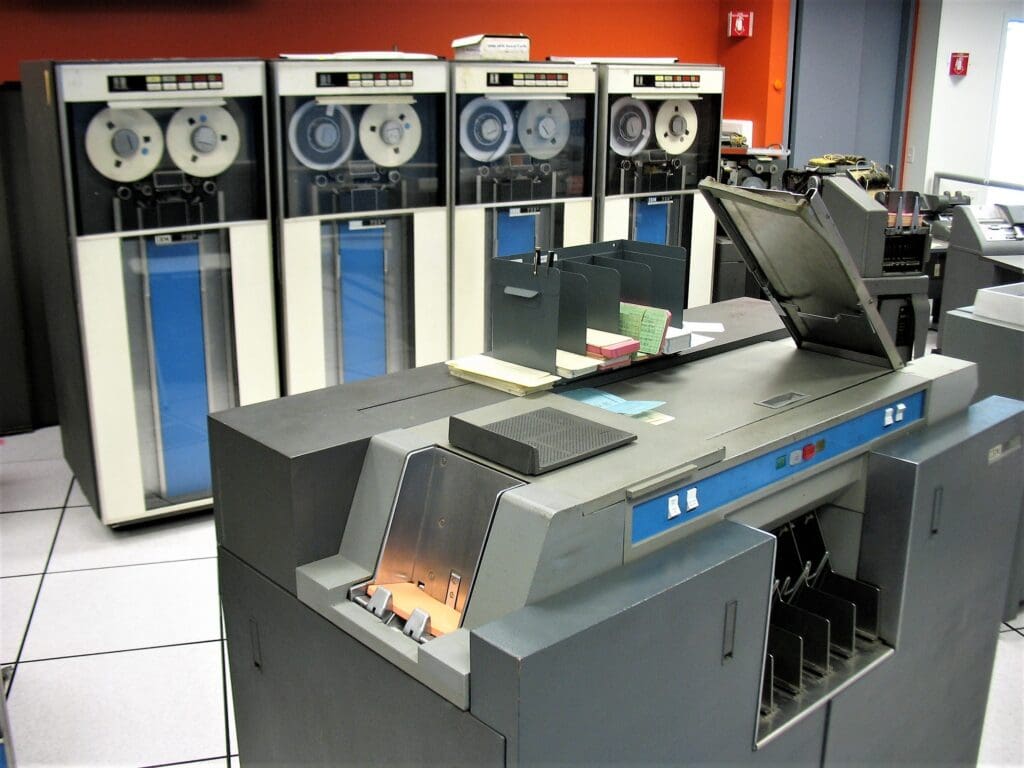
 Business computing took a major leap forward 73 years ago this month when IBM announced the IBM 650. IBM calls it the first mass-produced computer, and it also became the company’s first highly profitable computer.
IBM marketed the 650 as an “electronic automatic digital calculator.” At the time, “computers” referred to people who performed calculations. The machine stored numbers of up to 10 decimal digits on a rotating magnetic drum.
Transforming business operations
The IBM 650 allowed organizations to switch quickly between tasks and support continuous processing. As a result, it transformed operations such as inventory control and credit approval.
For example, companies could access inventory data in real time instead of waiting for overnight calculations. Consequently, they could make decisions faster and respond more quickly to business needs.
From modest expectations to massive demand
Available to rent for less than $4,000 per month, the 650 quickly exceeded IBM’s projection of 50 machines. Ultimately, IBM installed about 2,000 systems.
John Hancock Mutual Life Insurance Company received the first unit in December 1954. Within an hour of installation, employees used it to calculate commissions for the company’s 7,000 agents.
Planning and education fuel adoption
Thomas J. Watson Jr. and James W. Birkenstock created IBM’s product planning department, which developed the concept for the 650. The department bridged the gap between engineering innovation, and the punched-card products IBM’s sales team knew customers would buy.
Additionally, IBM increased demand by providing 650s to universities at no cost if they agreed to teach computing courses. At Columbia University, for instance, the IBM 650 expanded computer use to more than 200 research projects.
Did you enjoy this installation of SmarterMSP’s Tech Time Warp? Check out others here.
Photo: Around the World Photos / Shutterstock

This post originally appeared on Smarter MSP.