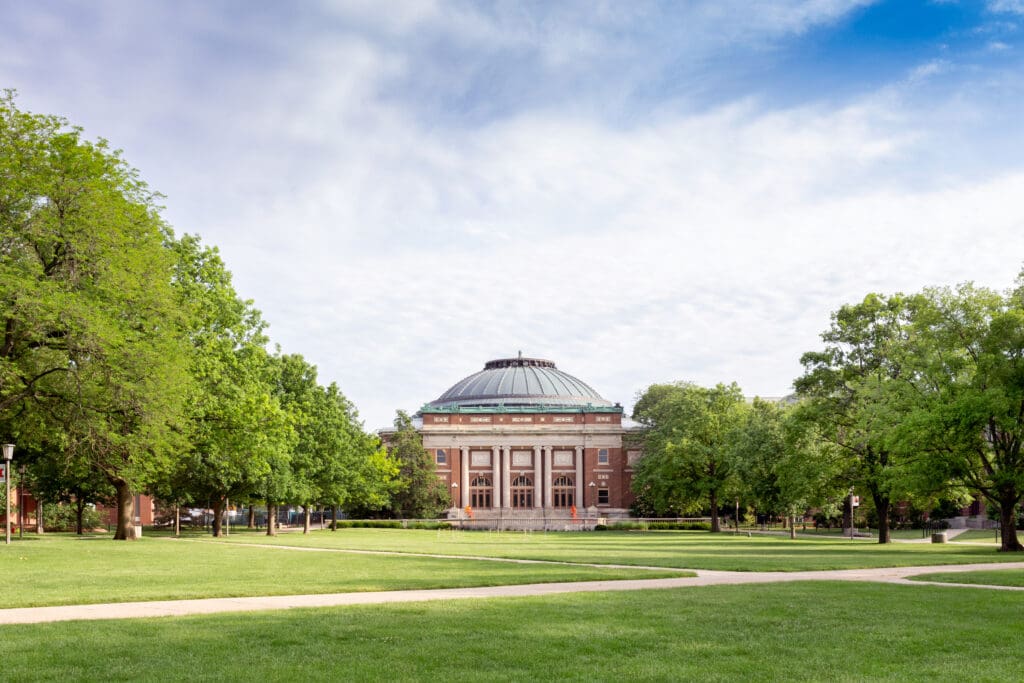
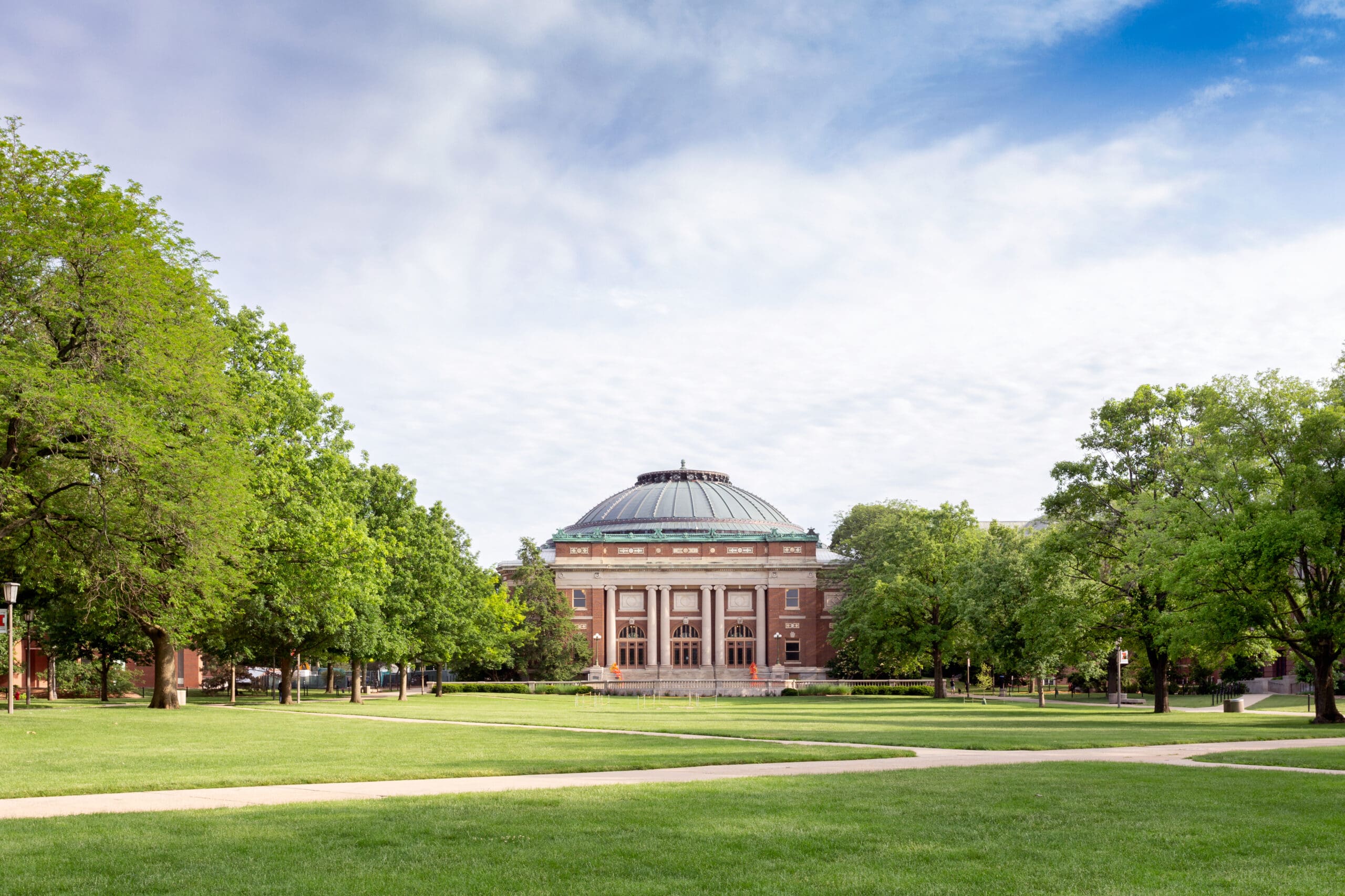
 Middle age looks good on this week’s Tech Time Warp, the National Center for Supercomputing Applications at the University of Illinois. The National Science Foundation opened NCSA on Jan. 15, 1986, in response to an unsolicited proposal from eight Illinois researchers including astrophysicist Larry Smarr.
The researchers identified a “famine” of vector supercomputing power in the United States. Out of the cornfields of Central Illinois came a national “center of excellence” for researchers. NSCA joined the Cornell Theory Center, the John von Neuman Center at Princeton University, the San Diego Supercomputer Center, and the Pittsburgh Supercomputing Center.
A milestone moment: one million CPU hours
In the late 1980s, NSCA and the other NSF supercenters focused on deploying large vector and parallel processing systems, including Cray supercomputers. This opened remote supercomputing access to researchers across the country. Over the next decade, NSCA grew in impact. Along with the other NSF supercenters, it became a “MetaCenter” with shareable resources. As Northwestern University physics professor Arthur J. Freeman stated in a 1995 report, the centers became a “major force in giving the U.S. leadership in vast areas of computational science and engineering.” In 1999, NCSA achieved a record usage of 1 million normalized CPU hours in a single month.
From browsers to breakthroughs
One of the most famous projects to come out of NCSA is Mosaic. This was the first graphical web browser, developed by Marc Andreessen and Eric Bina and released in April 1993. In 2003, NCSA researchers connected 70 PlayStation 2 consoles in an integrated Linux cluster with the ability to run scientific computations.
Did you enjoy this installation of SmarterMSP’s Tech Time Warp? Check out others here.

Photo: Ken Wolter / Shutterstock
This post originally appeared on Smarter MSP.